
The Sponge Wars of 1907: When Tarpon Springs Became the Center of a Gulf Coast Conflict
- Mar 29
- 5 min read
By Joe Marzo

At the beginning of the twentieth century, Tarpon Springs was still searching for its place along Florida’s Gulf Coast. It was a quiet settlement, built around the bayou and the surrounding waters, with no defining industry strong enough to secure its future. That would soon change. But the transformation would not come quietly, and it would not come without conflict.
Before Tarpon Springs rose to prominence, the sponge trade in Florida was already well established further south. For decades, Key West fishermen had dominated the industry, working the Gulf using a method known as hooking. From small boats, they scanned the water through glass bottom buckets and used long poles to snag sponges from the ocean floor. It was slow, deliberate work, but it was effective enough to sustain a steady trade.
The sponge beds of the Gulf were treated as a shared resource. There were no clear boundaries, no strict regulations, and no single town that controlled the industry. The system worked because it had limits. Hooking depended on visibility, weather, and depth. There was only so much a fisherman could reach from the surface.
Those limits were about to disappear.
In the early nineteen hundreds, Greek immigrants began arriving in Tarpon Springs, many from islands where sponge diving had been practiced for generations. They brought with them a method that would fundamentally change the industry. Instead of working from above, they went below.
Using heavy canvas suits and brass helmets supplied with air from the surface, these divers descended directly to the ocean floor. They did not rely on guesswork or visibility. They could walk among the sponge beds, select the best harvests, and stay underwater far longer than any hook fisherman could operate from above. The results were immediate.
Divers brought in larger hauls. They worked deeper waters. They expanded the reach of the industry beyond what had previously been possible. Tarpon Springs, almost overnight, began to grow into something new. Boats were refitted for diving. Crews were organized around the new method. The volume of sponges entering the market increased dramatically. But success in Tarpon Springs came at a cost elsewhere.
The Key West fishermen saw what was happening and understood the implications immediately. This was not a minor improvement. It was a complete shift in how the industry functioned. The divers were harvesting more sponges in less time, and they were doing so in waters that had long been part of the Key West fleets’ working grounds.
What had once been a shared system was becoming a competitive one. By nineteen hundred seven, the tension between the two groups had escalated beyond disagreement. It had become confrontation. Key West sponge fleets began operating in the same waters as the Tarpon Springs diving boats. Encounters between the crews grew increasingly hostile. Boats shadowed one another across the Gulf, each trying to assert control over the most productive sponge beds. Arguments broke out on the water and carried back to the docks. Soon, those arguments turned into action.
There were reports of sabotage. Equipment was tampered with. In some cases, air lines supplying divers were cut. For a diver on the ocean floor, the loss of air was not just dangerous. It was potentially fatal. A single act of sabotage could mean death.
Other confrontations became physical. Crews clashed directly as they competed for access to the same territory. The Gulf waters, once a place of routine labor, had become a contested space where competition blurred into violence.
Back in Tarpon Springs, the effects were immediate and visible. The town was small, and word traveled quickly. Stories of confrontations spread through the sponge docks and into the streets. What had begun as an economic shift had become something far more serious. Tarpon Springs was now at the center of a regional industry conflict.
The Greek divers did not back down. Many of them had come to Florida specifically for this opportunity. Sponge diving was not new to them. It was a tradition, a skill passed down through generations. They understood the risks of the work, and they were not intimidated by the growing hostility.
The Key West fishermen were equally determined. They argued that diving was destructive, that it allowed for overharvesting and would ultimately damage the sponge beds beyond recovery. Whether driven by genuine concern or by the threat to their livelihoods, their resistance remained strong.
As the conflict intensified, it drew the attention of authorities. What had begun as a dispute between competing fishermen was now threatening the stability of an entire industry. Sponges had become an increasingly valuable Florida export, and prolonged disruption posed a risk not just to individual crews, but to the state’s growing economy.
There were calls for intervention. Local and state officials began to consider ways to regulate the industry. Some pushed for restrictions on diving, arguing that it was too aggressive and would strip the sponge beds faster than they could recover. Others called for clearer rules governing access to the Gulf’s sponge grounds in an attempt to reduce conflict between the two groups.
For a time, the possibility of limiting or even banning sponge diving was seriously discussed.
But the reality on the water made the decision difficult. Diving was producing results that could not be ignored. The volume of sponges being harvested from Tarpon Springs far exceeded what had been possible under the hooking method. The town was growing, investment was increasing, and the economic potential of the industry was becoming clear.
In the end, the government did not stop the change. It allowed it to continue.
There were no sweeping bans, no decisive rulings that settled the conflict outright. Instead, the industry evolved on its own terms, shaped by competition and economics rather than regulation.
And economics favored the divers.
Over time, the advantages of diving became impossible to resist. Higher yields, greater efficiency, and access to deeper sponge beds gave Tarpon Springs a clear edge. The center of the sponge industry began to shift north, away from Key West and toward the growing fleets along the Tarpon docks.
Some fishermen adapted, adopting the new methods in order to survive. Others could not, and their role in the industry gradually diminished.
The violence that had marked the peak of the Sponge Wars faded, not because tensions disappeared, but because the outcome became clear. Tarpon Springs had emerged as the dominant force.
But the consequences of that dominance would continue to unfold.
The rapid expansion of sponge diving brought with it the very concerns that had been raised during the conflict. Increased harvesting placed pressure on the sponge beds, and the long term sustainability of the industry came into question. In later years, disease would devastate sponge populations, exposing how fragile the system truly was.
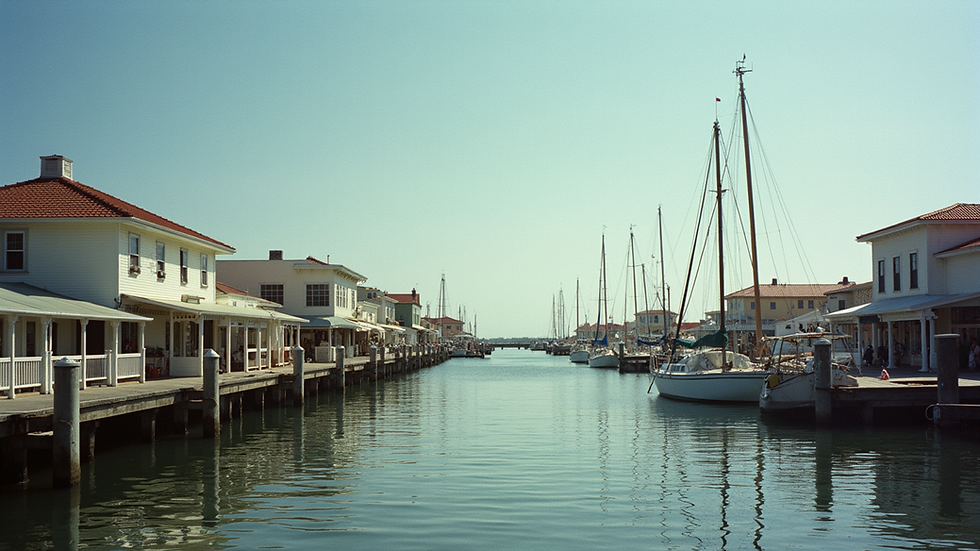
Still, the transformation of Tarpon Springs was undeniable.What had once been a quiet Gulf Coast settlement became the Sponge Capital of the World, its identity shaped by the very conflict that had nearly destabilized it. The Greek community established deep roots, building businesses, churches, and traditions that continue to define the city today. The docks filled with boats built for diving, and the waterfront became the center of a global trade.
The Sponge Wars were not a single battle, but a turning point. They marked the moment when Tarpon Springs stopped searching for its future and found it, not through gradual growth, but through conflict, innovation, and the willingness to embrace change when others resisted it. In the end, the Gulf did not belong to those who had worked it the longest. It belonged to those who could adapt to it.
And in nineteen hundred seven, that adaptation reshaped an entire town.

Comments